


Introduction
Head & Shoulders Isn’t a Reversal Pattern, It’s a Transfer of Risk
Every trader recognises the Head and Shoulders pattern it’s one of the oldest formations in technical analysis.
But within Smart Money Concepts (SMC), this pattern means much more than just a “trend reversal.”
It represents a shift in market intent a clear transition from accumulation to distribution, where Smart Money exits while retail traders enter.
Understanding how to interpret this structure through liquidity and displacement transforms a common retail pattern into a high-probability institutional setup.
The True Meaning Behind the Head & Shoulders Pattern
Forget the textbook drawing for a moment.
In Smart Money terms, the Head and Shoulders is not just a shape, it’s a sequence of liquidity engineering:
- Left Shoulder → Liquidity builds as price forms a temporary high.
- Head → Liquidity is taken as price runs above the previous high (stop hunt).
- Right Shoulder → Weakness forms as Smart Money exits positions and price fails to make new highs.
Once the neckline breaks, structure shifts, and the market delivers to lower liquidity pools.
This same logic applies inversely for Inverse Head & Shoulders (accumulation and bullish reversal).
Step 1
The Left Shoulder: Liquidity Build
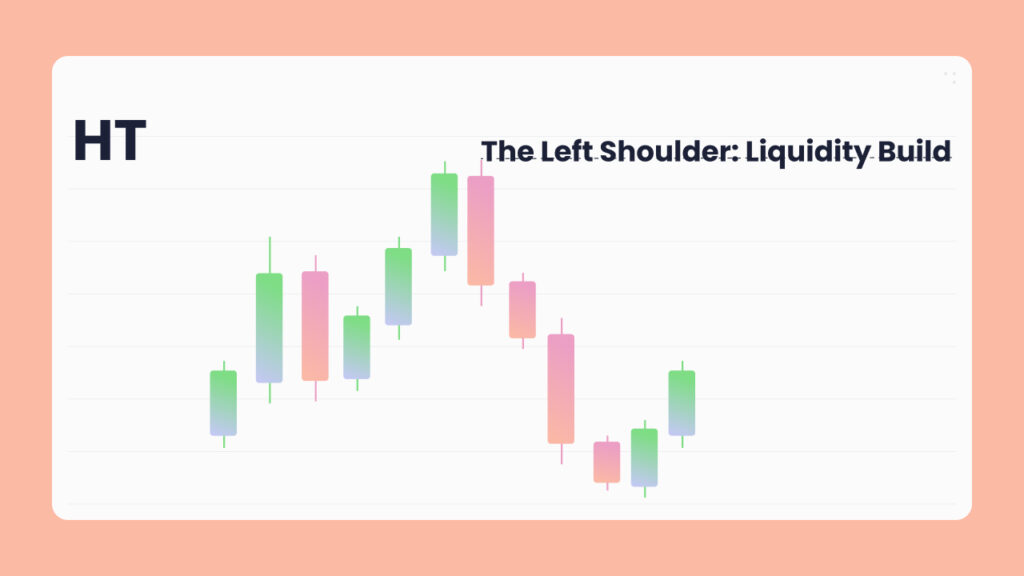
The left shoulder forms when price begins to slow down in an uptrend.
Retail traders see this as a temporary top, but Smart Money is quietly building liquidity above it.
Key observations:
- The trend remains intact.
- Traders keep buying dips.
- Equal highs often form inviting stops just above.
This sets the stage for the next move liquidity collection.
Step 2
The Head: Liquidity Sweep
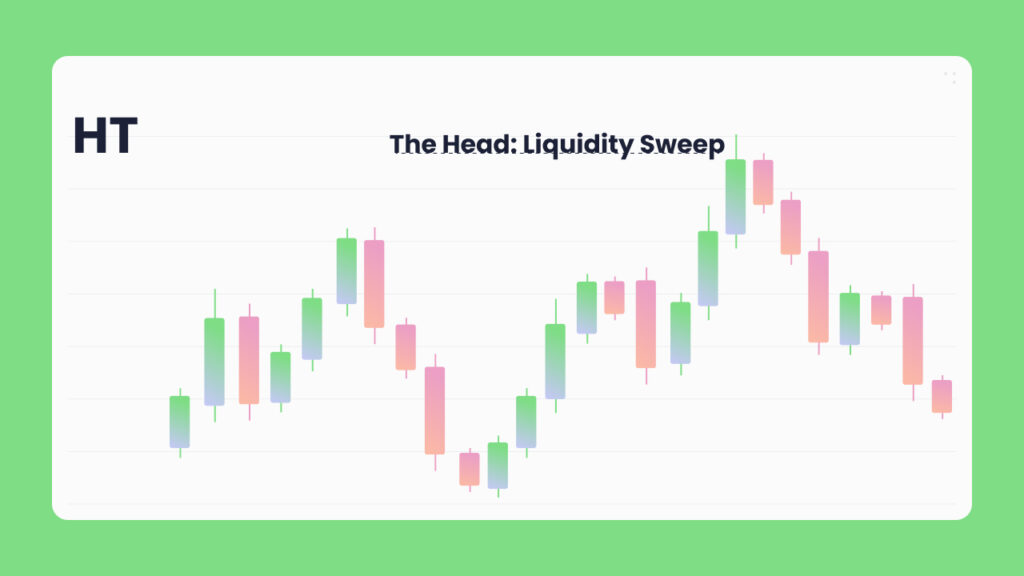
Price makes one final push higher, forming the “head.”
Here’s where Smart Money takes action:
- The move above the left shoulder’s high runs retail stops (buy-side liquidity).
- New traders enter long on the breakout, providing liquidity for institutional distribution.
But instead of continuing higher, price quickly rejects and reverses, a sign that the breakout was engineered, not organic.
This displacement marks the start of a Smart Money shift.
Step 3
The Right Shoulder: Confirmation of Weakness
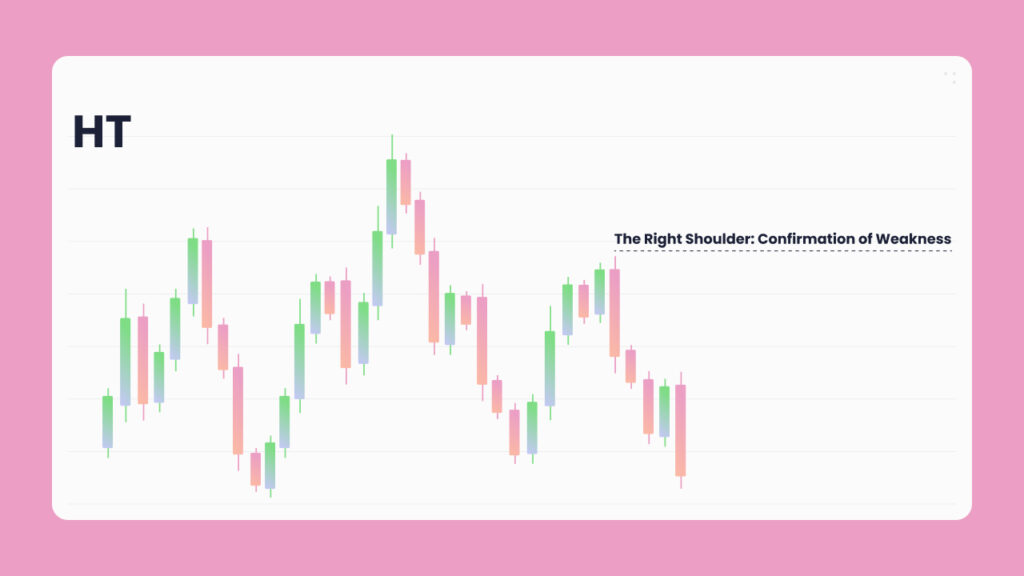
As price retraces, it forms the right shoulder a lower high that fails to break the head’s high.
This phase reveals loss of momentum and institutional exit.
Smart Money is no longer supporting the uptrend; they’ve completed distribution.
At this point, retail traders are still buying dips unaware that the trend has shifted.
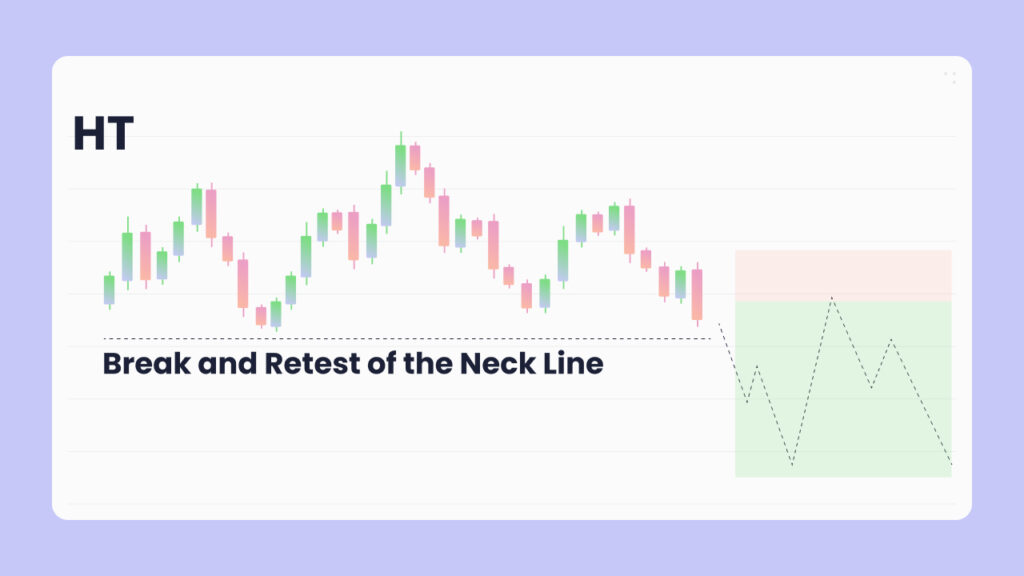
Trading the Smart Money Head & Shoulders
Mark the Neckline
Draw a horizontal line through the swing low between the left shoulder and the head.
This is your neckline the key structure level confirming the transition.
Wait for Break & Retest
Once price breaks the neckline with displacement, don’t enter immediately.
Wait for a retest of that level, ideally aligning with an Order Block (OB) or Fair Value Gap (FVG) for confirmation.
Execute With Confluence
Enter on confirmation (CHoCH, engulfing candle, or displacement).
Keep stops tight above the right shoulder or OB boundary.
Target the next liquidity pool or imbalance below.
Example
Imagine you’re analyzing NASDAQ during the New York session:
- Price forms a clean left shoulder and pushes higher into the “head.”
- The head takes out previous highs sweeping liquidity.
- Price rejects sharply, forming a lower high (the right shoulder).
- The neckline breaks with displacement.
- On the retest, you spot a bearish FVG your entry trigger.
You short from the retest, stop above the right shoulder, and target the next sell-side liquidity zone.
That’s not a pattern trade it’s Smart Money execution through structure and intent.
Why This Setup Works
✅ Liquidity Logic: The pattern’s symmetry comes from liquidity building and collection.
✅ Structure Confirmation: The neckline break validates the shift in order flow.
✅ Confluence-Driven Entries: Using FVGs and OBs refines accuracy.
✅ Psychological Trap: Retail buys the head; Smart Money sells into it.
Trading Style
Best For: Intraday & Swing Traders
Works On: Forex • Indices • Gold
Sessions: London & New York
Confluences: Order Blocks (OBs), Fair Value Gaps (FVGs), CHoCH, BOS, Liquidity Sweeps
Key Takeaways
✅ Left Shoulder → Liquidity builds
✅ Head → Stops get swept
✅ Right Shoulder → Weakness confirmed
✅ Neckline break + retest = confirmation entry
✅ Targets = liquidity zones or 1:3 RR minimum
Final Thoughts
The Head and Shoulders Pattern isn’t a retail reversal setup it’s Smart Money’s exit signal.
It shows how liquidity builds, how manipulation unfolds, and how true structure shifts before major delivery.
Next time you spot one forming, don’t trade the shape read the intent behind it.
Ask yourself:
“Whose stops were taken… and who’s now in control?”
That’s how Smart Money sees it and now, so can you.
Overview
Head & Shoulders Isn’t a Reversal Pattern, It’s a Transfer of Risk
The Head and Shoulders pattern isn’t just a shape it’s Smart Money’s way of exiting positions.
Each phase reveals how institutions trap retail traders before reversing the trend.
The left shoulder builds liquidity, the head clears it, and the right shoulder confirms weakness.
Once structure breaks below the neckline, the real move begins.
The Core Framework
1. Identify the Structure
- Left Shoulder: Liquidity builds as price stalls at a high.
- Head: Price sweeps above to collect stops.
- Right Shoulder: Momentum fades and structure weakens.
2. Mark the Neckline
Connect the swing lows between the shoulders, that’s your confirmation level.
3. Wait for the Break and Retest
When price breaks below the neckline with displacement, wait for a retest into an OB or FVG for entry.
4. Execute from Value
Enter short on confirmation; stop above the right shoulder.
Target clean liquidity zones or a 1:3 RR minimum.
Execution Tips
✅ Confirm weakness before entry don’t trade the shape alone.
✅ Works best in London or NY sessions when reversals form from engineered liquidity.
✅ Combine with FVG or OB confluence for precision.
Summary
- Left Shoulder = liquidity build
- Head = liquidity taken
- Right Shoulder = structure weakness
- Neckline break = confirmation
The pattern isn’t the setup, the confirmation is.
Introduction
The Head and Shoulders is Smart Money’s exit model a structured transfer of liquidity from institutions to retail.
It forms at premium pricing after accumulation has delivered its move. Liquidity is engineered through symmetry; the “head” sweeps stops and fuels distribution.
Once the neckline breaks with displacement, Smart Money begins delivery to the downside.
Execution Logic
- Timing: Look for formation completion near session overlaps (London → NY).
- Sweep: Head takes out buy-side liquidity; displacement confirms the trap.
- Shift: Structure breaks the neckline, confirm with BOS + FVG alignment.
- Entry: Retrace into the OB within displacement; stops above right shoulder.
- Management: Take partials at intraday lows; hold remainder for deeper liquidity.
Precision Notes
- Best when the head aligns with HTF premium or imbalance.
- Avoid anticipating the pattern, confirmation is essential.
- Mirror logic applies for inverse setups at discount pricing.
Principle
Distribution isn’t visible in the pattern, it’s revealed in the structure shift that follows.