


Introduction
Liquidity Sweeps Aren’t Punishment, They’re the Setup for the Shift
In every market move, there’s a story hidden beneath the candles. Before price takes off in one direction, institutions quietly position their orders, building liquidity, executing large positions, and setting the stage for displacement.
These institutional footprints are known as Order Blocks. Recognising them gives traders a view into where Smart Money entered the market, and, more importantly, where it’s likely to re-enter when price returns to those zones.
Whether you trade Forex, Indices, or Gold, understanding order blocks will help you align with institutional flow instead of chasing after retail signals.
What Is an Order Block?
An Order Block (OB) represents the final opposite candle (bullish or bearish) before a significant market move or “displacement.” In a bullish move, the order block is the last bearish candle before price breaks structure and pushes higher. In a bearish move, it’s the last bullish candle before a strong drop.
These candles mark where institutional orders were placed, zones where Smart Money accumulated positions before driving price in their intended direction.
Once price leaves the zone and creates imbalance, it often revisits that order block later to rebalance liquidity or reload orders before continuing.
Why Order Blocks Matter
Retail traders often see these retests as random pullbacks, but to institutional traders, this is the opportunity.
Retail traders often see these retests as random pullbacks, but to institutional traders, this is the opportunity.
When price returns to an order block:
- It’s tapping into unfilled orders
- It’s collecting liquidity from trapped traders.
It’s often the launch point for the next impulsive move.
By trading from these zones, you’re entering where Smart Money enters, not after the move, but at the origin of it.
Step-by-Step: How to Identify and Trade Order Blocks
Step 1
Find the Last Opposite Candle Before Displacement
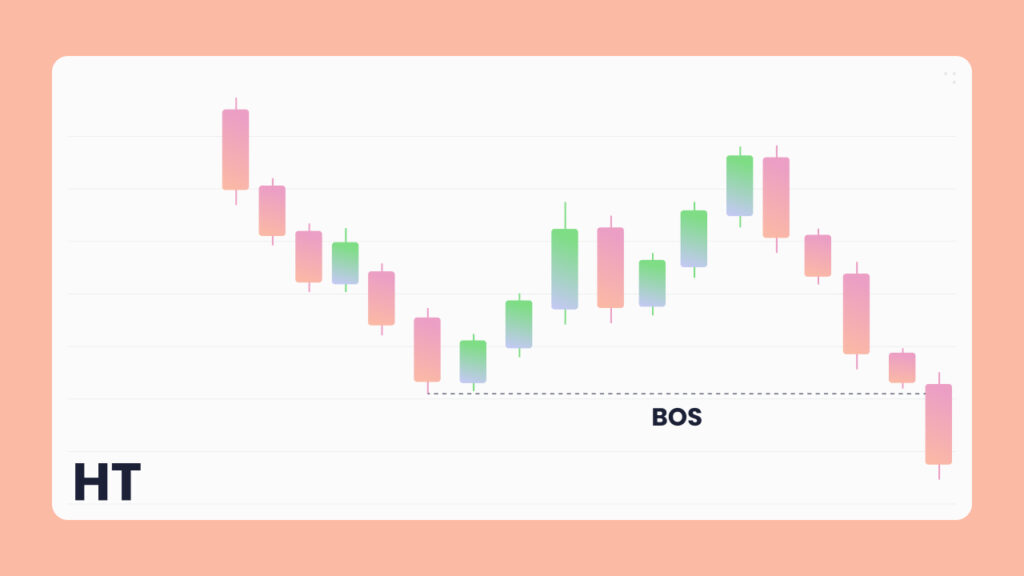
Look for a strong impulsive move that breaks market structure (BOS).
The final opposite candle before that break is your Order Block.
Step 2
Mark the Zone
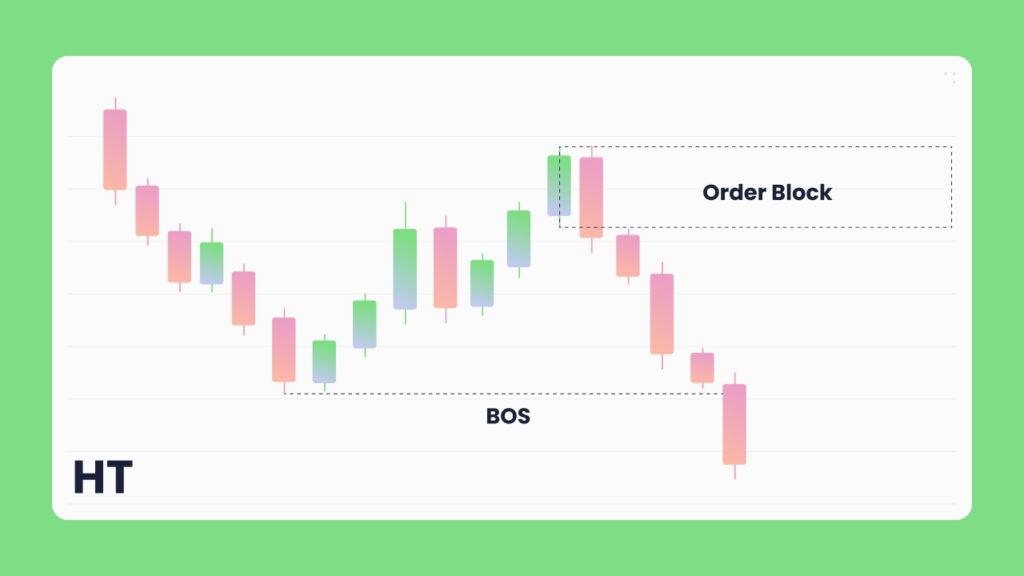
Highlight the body and wick of that candle (or just the body for cleaner charts).
This defines your area of interest, the zone where institutional orders were filled.
Step 3
Wait for the Retest
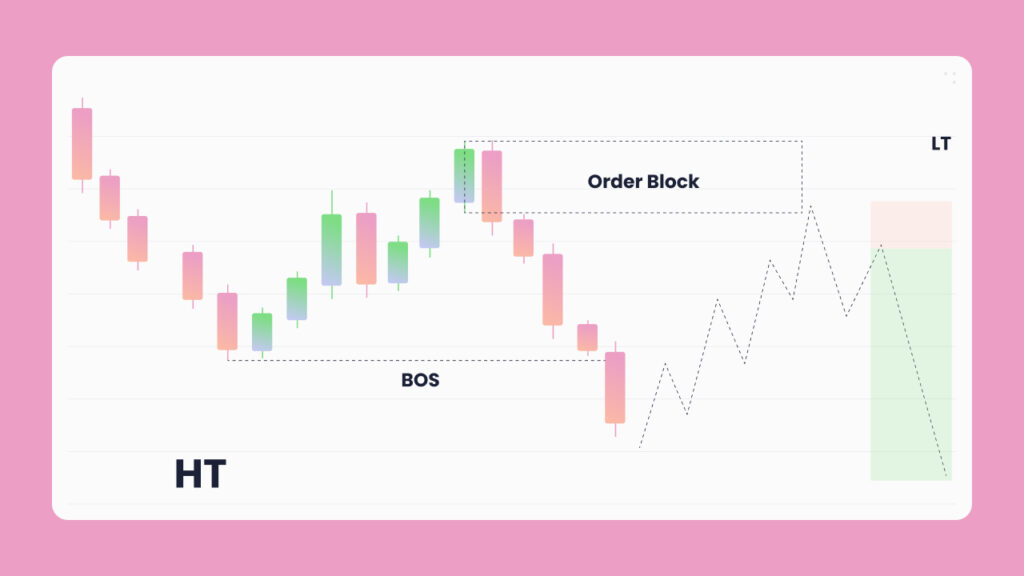
Patience is key. Don’t chase the initial move.
Wait for price to return to the order block, this is where Smart Money re-enters.
When price revisits the zone, look for lower-timeframe confirmation, such as:
- A Break of Structure (BOS) in your favor
- A Fair Value Gap (FVG) alignment for extra confluence
- Clear liquidity sweep or stop hunt before reversal
These confirmations filter out weak setups and increase your probability of catching the next move with precision.
Example
Let’s say EUR/USD breaks a previous high with a strong bullish displacement.
- Identify the last bearish candle before the move, that’s your bullish order block.
- Mark its zone.
- When price retraces back, watch how it reacts.
If it forms a small BOS or fills an FVG on a lower timeframe, that’s your cue to enter long, targeting the next liquidity pool above.
Trading Style
Best For: Intraday & Swing Traders
Works On: Forex • Indices • Gold
Confluences: Break of Structure (BOS), Fair Value Gaps (FVGs), Liquidity Sweeps
Key Takeaways
✅ Order Blocks mark institutional footprints before major moves
✅ Price often returns to these zones to rebalance and reload
✅ Combine OBs with BOS and FVGs for high-probability setups
✅ The retest is where Smart Money enters — stay patient
Final Thoughts
Mastering order blocks isn’t about memorising patterns, it’s about understanding why price moves.
When you learn to read where institutional orders originated, you stop reacting and start anticipating.
Add order blocks to your trading toolkit, combine them with structure and liquidity concepts, and you’ll begin to see the market from the Smart Money’s perspective.
Overview
Liquidity Sweeps Aren’t Punishment, They’re the Setup for the Shift
Order Blocks (OBs) mark where institutions placed major positions before displacement.
They act as zones of interest where Smart Money may re-enter to mitigate orders and continue delivery.
This strategy focuses on identifying these institutional footprints and trading the retest after confirmation.
The Core Framework
1. Identify Displacement
Look for a strong impulsive move breaking structure, this confirms institutional activity.
2. Mark the Order Block
The Order Block is the last opposite candle before that displacement:
- Bullish move → last bearish candle.
- Bearish move → last bullish candle.
3. Wait for the Retest
Price often retraces into the OB to rebalance before continuing.
4. Execute with Confirmation
When price returns to the OB, confirm with CHoCH, FVG, or engulfing confirmation.
Stops go beyond the OB; targets = external liquidity or opposing imbalance.
Execution Tips
✅ OBs are strongest when paired with displacement and BOS.
✅ Don’t trade every block, focus on those creating new structure.
✅ Combine with session timing and bias for refined entries.
Summary
- OB = institutional footprint before displacement.
- Retest = re-entry zone.
- Confirmation = entry trigger.
Order Blocks show where Smart Money moved first, and where they’ll likely return.
Institutional Context
Order Blocks represent institutional re-entry points where unfilled orders remain after displacement.
When price returns to these levels, Smart Money mitigates exposure, refills positions, and continues delivery.
Recognising OBs through displacement and structure shift is the foundation of precision trading.
Execution Logic
1️⃣ Structure: Identify BOS confirming displacement.
2️⃣ Define OB: Mark the last counter candle before that break.
3️⃣ Refinement: Focus on OBs that align with session bias and liquidity context.
4️⃣ Execution: Enter on retrace into OB, confluenced with FVG or CHoCH.
5️⃣ Risk: Stop beyond OB wick; partials into delivery or opposing liquidity.
Precision Notes
- HTF OBs define zones of control; LTF OBs provide sniper entries.
- Always confirm intent with displacement, context over color.
- Combine OBs with timing models (Silver Bullet, PO3) for high-probability setups.
Principle
Order Blocks are not candles, they’re footprints of intent. Trade the retest, not the reaction.