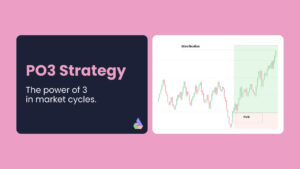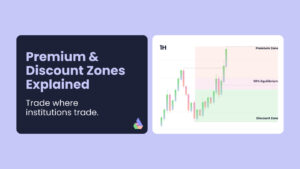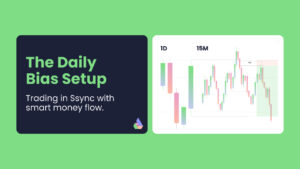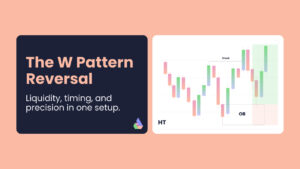

Learn trading strategies that other people are posting about online.
These strategies are not definitive “This is how you trade”, these are simply what other traders use to help them analyse the market and we have just gone and pieced them all together for you.
A trading strategy is a structured plan that guides when you enter and exit trades based on specific rules, signals, or conditions.
It can be fully mechanical, fully discretionary, or a blend of both.
A good trading strategy defines:
Your market (Forex, crypto, indices, stocks)
Your timeframe
Your entry criteria
Your stop loss method
Your take profit method
Your risk per trade
Your trade management rules
A strategy removes randomness from your trading and replaces it with consistency.
Without a clear strategy, every trade becomes emotional and inconsistent.
With a strategy, every trade becomes structured and repeatable.
A trading strategy helps you:
Trade with confidence instead of guessing
Avoid impulsive entries
Stay disciplined
Improve consistency
Measure performance
Reduce emotional trading
Build long-term profitability
Strategies are the foundation of becoming a rules-based trader.
Strong strategies share the same traits:
Clear rules (easy to follow, no confusion)
Testable (you can backtest it)
Repeatable (works across similar market conditions)
Aligned with your personality (time commitments, risk tolerance)
Data-driven (you can track performance through a journal)
The more measurable your strategy is, the easier it becomes to refine and improve.
The most common strategies used by retail and professional traders include:
Break and retest strategy
Trend-following strategy
Supply & demand trading
Support/resistance breakout strategy
Scalping strategies
Swing trading strategies
Mean reversion strategies
Moving average crossovers
Price action continuation patterns
Each strategy works in different market conditions, so traders often use more than one.
Choosing a strategy depends on your lifestyle, personality, and trading goals.
Ask yourself:
How much time can I be at the charts?
Do I prefer fast or slow trading?
Do I like technicals or fundamentals?
Am I comfortable with volatility?
What sessions can I trade?
Scalping suits fast decision-makers.
Swing trading suits patient traders with daytime jobs.
Day-trading suits structured routines.
There is no “best” strategy — only the one that fits you.
Yes, most traders eventually use 2–3 strategies depending on the market conditions.
For example:
Trending market → trend-following strategy
Ranging market → mean reversion strategy
High momentum → breakout strategy
However, beginners should master one strategy first before adding more.
Absolutely, it’s one of the best ways to grow.
Beginners can build simple strategies using:
Support & resistance
Market structure
Breakouts
Moving averages
Risk management rules
You don’t need complexity — you need clarity and consistency.
Strategies must be tested before risking real money.
You can test using:
Backtesting (look back at the last 3–12 months)
Forward testing (demo or small live account)
Your trading journal (to review mistakes and patterns)
This helps you understand:
Win rate
Drawdown
Average R:R
Best sessions
Best market conditions
The more data you collect, the more confidence you build.
Journaling is how you refine your strategy over time.
A trading journal helps you:
See which setups perform best
Identify what needs improving
Track mistakes
Record emotional patterns
Measure behaviour vs. results
Optimise entries and exits
Build consistency
Tools like FX Notes make this process instant, recording your screen, chart, notes, and behaviour automatically.