


Introduction
Silver Bullet Isn’t Guesswork, It’s Precision Inside the Killzone
Some setups rely on indicators.
Others rely on luck.
The ICT Silver Bullet Strategy relies on timing, liquidity, and precision.
Created by Michael J. Huddleston (ICT), this intraday model focuses on one specific time window the New York Killzone (10:00 AM–11:00 AM NY Time) where institutional order flow becomes clearest.
It’s a setup that repeats almost daily across Forex, Indices, and Gold, allowing traders to frame their day around one clean, high-probability opportunity.
When understood properly, it’s one of the most consistent and structured ways to trade Smart Money Concepts intraday.
What Is the Silver Bullet Strategy?
The Silver Bullet is a time-based Smart Money setup that combines session timing with market structure and Fair Value Gaps (FVGs).
It’s built around three key principles:
- Timing — Trade only during the 10–11 AM New York window (the “Killzone”)
- Displacement — Wait for price to break structure with strong momentum
- Retracement to FVG — Enter when price returns to fill the inefficiency
This method doesn’t require indicators, just structure, patience, and discipline.
Why the New York Killzone?
The NY Killzone (10–11 AM) overlaps with the London close, one of the most liquid and volatile times of day.
During this hour, Smart Money often executes continuation or reversal moves following the morning’s liquidity collection.
This window gives:
- Institutional order flow clarity
- High volatility for clean displacements
- Low noise compared to the open
When combined with liquidity concepts, this timing becomes the perfect storm for precision setups.
Step-by-Step: How the ICT Silver Bullet Works
Step 1
Define the Time Window
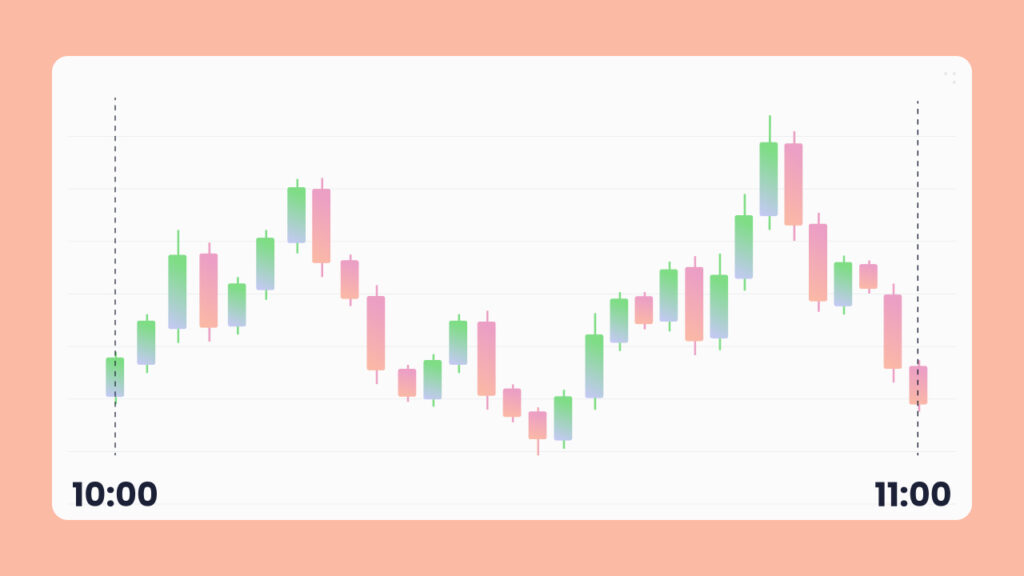
Mark the 10 AM–11 AM (New York time) range on your chart.
This is your execution window, the only hour you’ll look for setups.
Anything before is just context; anything after is noise.
Step 2
Identify Liquidity Pools
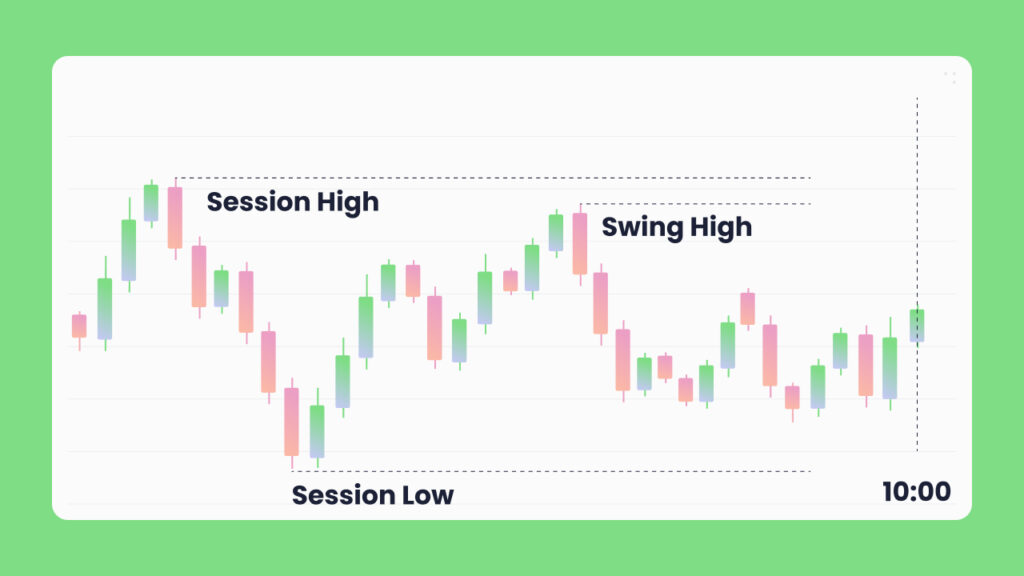
Before 10 AM, mark out:
- Asian and London session highs/lows
- Equal highs/lows
- Previous day/session liquidity points
These levels show where price is likely to engineer stops before the real move begins.
Step 3
Wait for Displacement

During the Killzone, watch for a clear displacement, a strong move breaking short-term structure with visible Fair Value Gaps left behind.
This shows institutional interest entering the market.
Example:
- Price sweeps London session highs, then drops sharply (bearish displacement).
- Or price sweeps lows, then rallies with strength (bullish displacement).
This move sets the stage for the continuation trade.
Step 4
Mark the Fair Value Gap (FVG)
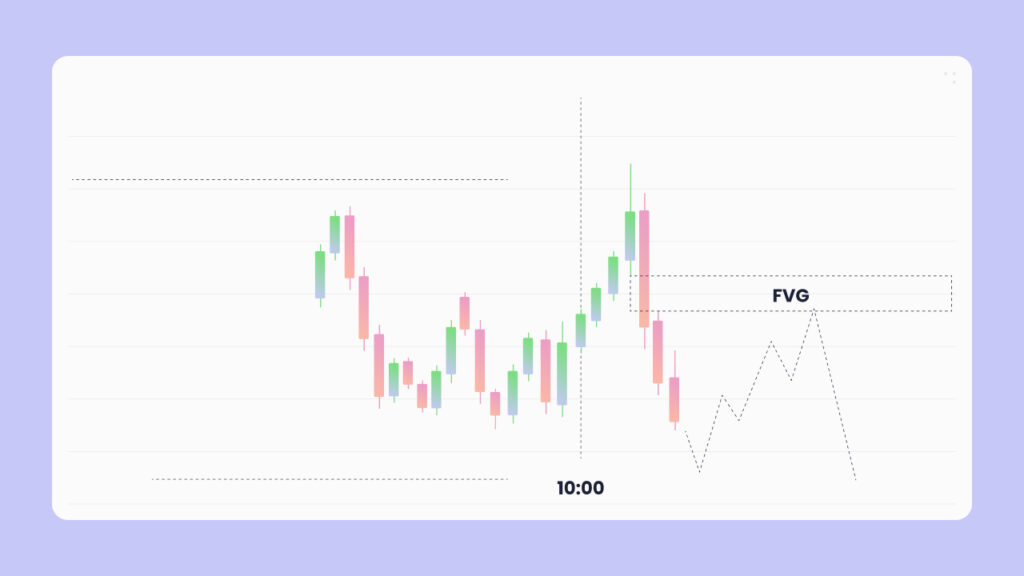
Identify the FVG created during displacement (the three-candle pattern where price leaves inefficiency).
That gap represents Smart Money’s imbalance zone, where they may re-enter on a retracement.
Mark it clearly.
Step 5
Wait for the Retrace & Confirmation

Patience is key.
Price will often retrace into the FVG, that’s your opportunity zone.
When it does:
- Look for engulfing confirmation or a lower-timeframe BOS for precision entry.
- Set stop loss just beyond the FVG or recent swing point.
The trade should flow in the direction of the original displacement, the move that defined intent.
Step 6
Manage Risk and Target Liquidity

Target logical liquidity pools or a fixed 1:3 RR minimum.
Ideal profit targets include:
- Previous session high/low
- Opposite side of the morning range
- Imbalance or inefficiency fills
Keep management mechanical, the edge lies in the setup, not in guesswork.
Example
Let’s say you’re trading NAS100 on a Tuesday:
- Before 10 AM, price forms equal highs above London’s range.
- At 10:10 AM, price spikes up (sweeps liquidity) and then drops hard, creating a bearish FVG.
- You mark the gap and wait.
- At 10:30 AM, price retraces into the FVG and forms a bearish engulfing candle.
- You enter short with stop above the FVG and target the morning’s low.
By 10:50 AM, price delivers to your target, one setup, one clean trade.
That’s the Silver Bullet: simple, structured, repeatable.
Why the Silver Bullet Works
✅ Institutional Timing: Focused during peak liquidity hours
✅ Clear Structure: Based on displacement and inefficiency, not indicators
✅ Efficient Entries: Uses FVG retracements for minimal risk
✅ Consistent Framework: The same process applies daily across assets
It’s not magic, it’s market logic, wrapped in precision timing.
Trading Style
Best For: Intraday Traders (NY Session)
Works On: Forex • Indices • Gold
Confluences: Fair Value Gaps (FVGs), Liquidity Sweeps, Engulfing Confirmation, Break of Structure (BOS)
Key Takeaways
✅ Trade only within the NY Killzone (10–11 AM NY Time)
✅ Wait for displacement + FVG creation
✅ Enter on retrace into the FVG with confirmation
✅ Target next liquidity pool or 1:3 RR minimum
Final Thoughts
The ICT Silver Bullet Strategy embodies the Smart Money approach, precision, patience, and process.
By focusing on one session, one setup, and one confirmation, you remove noise and emotion from your trading.
Next time you’re on the chart during the NY Killzone, ask yourself:
“Am I trading randomness… or reading intent?”
If your setup shows displacement, inefficiency, and timing, you’ve found the Silver Bullet.
Overview
Silver Bullet Isn’t Guesswork, It’s Precision Inside the Killzone
The ICT Silver Bullet is one of the cleanest intraday Smart Money setups, built around timing, displacement, and precision.
It focuses on a single time window, the New York Killzone (10–11 AM NY Time), when liquidity, volatility, and institutional order flow align perfectly.
Within that hour, you wait for displacement to create a Fair Value Gap (FVG), then trade the retrace for continuation.
The Core Framework
1. Define the Time Window
Mark the 10:00–11:00 AM (NY time) range, that’s your Silver Bullet window.
2. Wait for Displacement
Look for a clean move that breaks short-term structure and leaves an FVG behind.
This confirms institutional intent.
3. Mark the Fair Value Gap
The FVG becomes your entry zone for the retrace.
4. Execute on the Retrace
When price retraces into the gap, enter in the direction of displacement.
Stops go beyond the gap or swing point.
Target liquidity or a 1:3 RR minimum.
Execution Tips
✅ Only trade during the NY Killzone (10–11 AM).
✅ Confirmation first, entry second, displacement defines direction.
✅ Combine with SMT divergence or session bias for added confluence.
Summary
- 10–11 AM NY = Silver Bullet window.
- Look for displacement + FVG.
- Enter on retrace, not the initial move.
- Precision and patience deliver the edge.
Institutional Context
The Silver Bullet is a time-based precision model designed for controlled liquidity execution.
The 10–11 AM NY Killzone captures post–London close rebalancing and New York continuation, the perfect environment for displacement-driven entries.
The model works because it targets inefficiencies created during session transition.
Execution Logic
- Time Focus: Trade only between 10:00–11:00 AM NY.
- Displacement: Identify sharp structure breaks leaving visible FVGs.
- Retrace Entry: Enter on return to the FVG in direction of displacement.
- Risk: Invalidation below/above the FVG or internal swing.
- Targets: Opposite side liquidity or previous session levels.
Precision Notes
- The setup is session-dependent, ignore it outside the Killzone.
- Best results when aligned with daily bias and session imbalance.
- Watch for SMT divergence or volume confirmation during displacement for conviction.
Principle
The Silver Bullet isn’t about prediction, it’s about executing inside institutional timing.