


Introduction
PO3 Doesn’t Predict Direction, It Reveals the Path Institutions Already Chose
Markets don’t move randomly, they follow design, not chance.
Behind every session, every reversal, and every breakout lies a three-phase cycle that Smart Money repeats day after day:
Accumulation → Manipulation → Distribution
This is the essence of the PO3 Strategy, the “Power of 3.”
By understanding these phases, traders can align with institutional intent, anticipate market direction, and execute with timing and precision.
The PO3 framework is especially effective around the London Open, where liquidity builds, traps form, and the real move of the day begins.
What Is the Power of 3 (PO3)?
The Power of 3 represents the natural rhythm of institutional price delivery.
Smart Money uses this sequence to build positions, trigger liquidity, and drive price to targets with efficiency.
The three phases are:
- Accumulation — Building positions within a tight range
- Manipulation — Sweeping liquidity to trap retail traders
- Distribution — Delivering price in the true intended direction
This 3-step structure repeats across sessions, days, and even weeks, making it one of the most powerful frameworks for understanding institutional behavior.
Step 1
Accumulation Phase
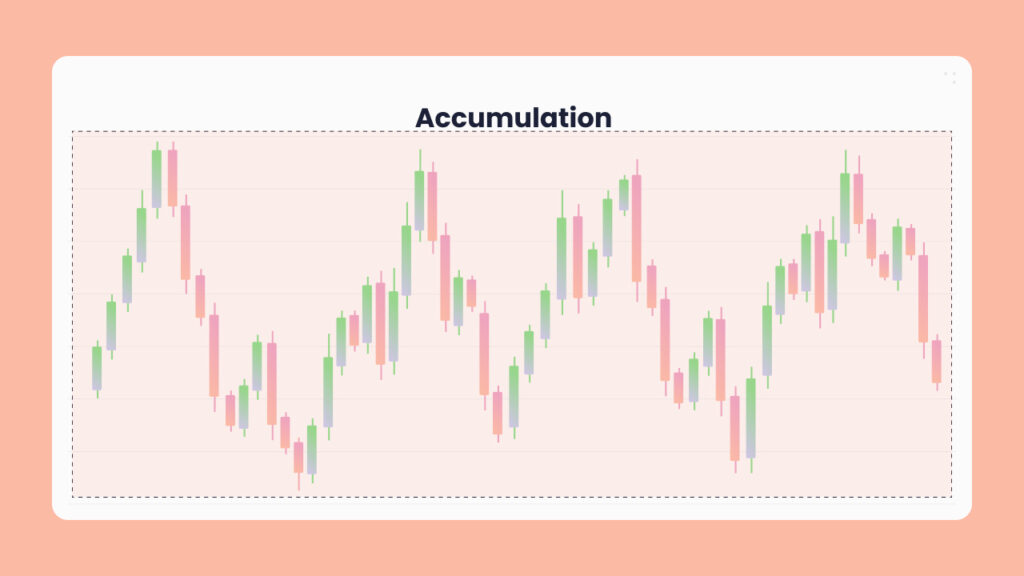
The Accumulation phase is where Smart Money prepares. Price consolidates in a tight range, often during low-volume hours (like the Asian session or pre-London open).
Retail traders see this as indecision, Smart Money sees it as position building.
During accumulation:
- Volume is low
- Price forms equal highs/lows
- Liquidity pools are created above and below the range
This range acts as the “fuel tank” for the coming move. Smart Money accumulates orders quietly while retail traders wait for a breakout that never truly favours them.
Step 2
Manipulation Phase
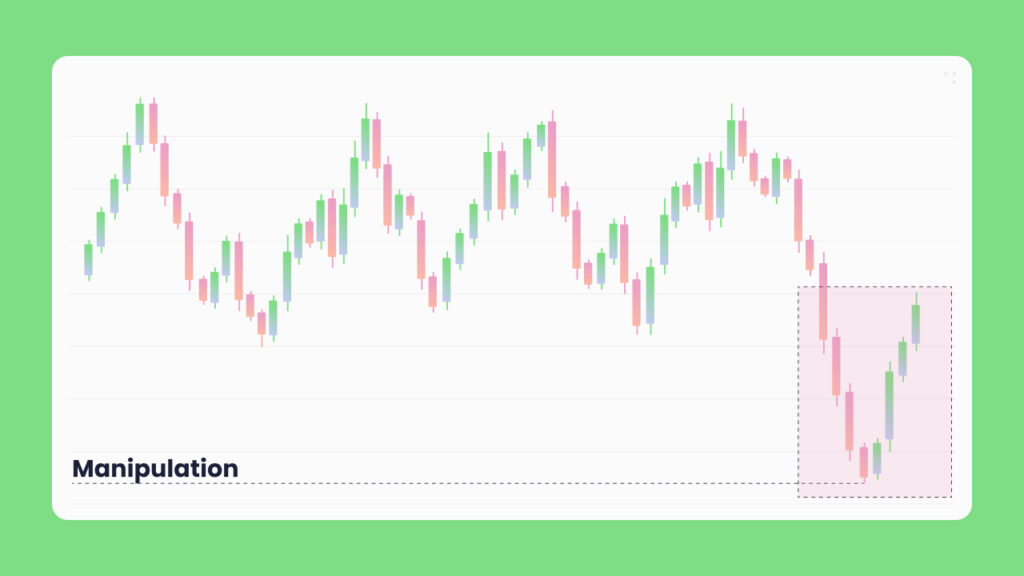
The Manipulation phase is where the trap is set.
Just before the real move begins, price breaks out of the range, triggering stops or drawing traders into the wrong direction.
This is the liquidity sweep, the “fake move” that clears both sides of the market before Smart Money takes control.
For example:
- Price spikes above the range to grab buy-side liquidity, then sharply reverses down.
- Or it dips below the range to grab sell-side liquidity, then launches higher.
This move is emotional, fast, and deceptive. It’s designed to mislead, not to last.
Once manipulation ends, a shift in structure (BOS or CHoCH) confirms the next phase.
Step 3
Distribution Phase
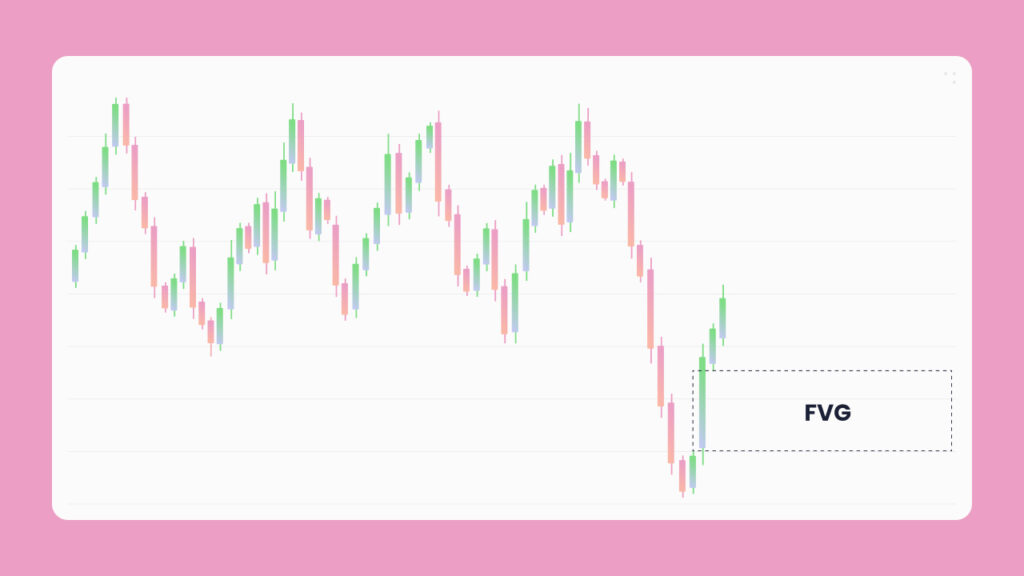
After manipulation, price enters the Distribution phase, the true directional move.
This is where Smart Money unloads positions, delivering price to predetermined targets such as:
- Previous session highs/lows
- Imbalance fills
- Institutional liquidity pools
Distribution moves are often clean, impulsive, and sustained, the exact opposite of the chaos seen during manipulation.
For traders, this is the execution phase, where bias, confirmation, and precision align.
Accumulation builds the energy.
Manipulation triggers emotion.
Distribution delivers the result.
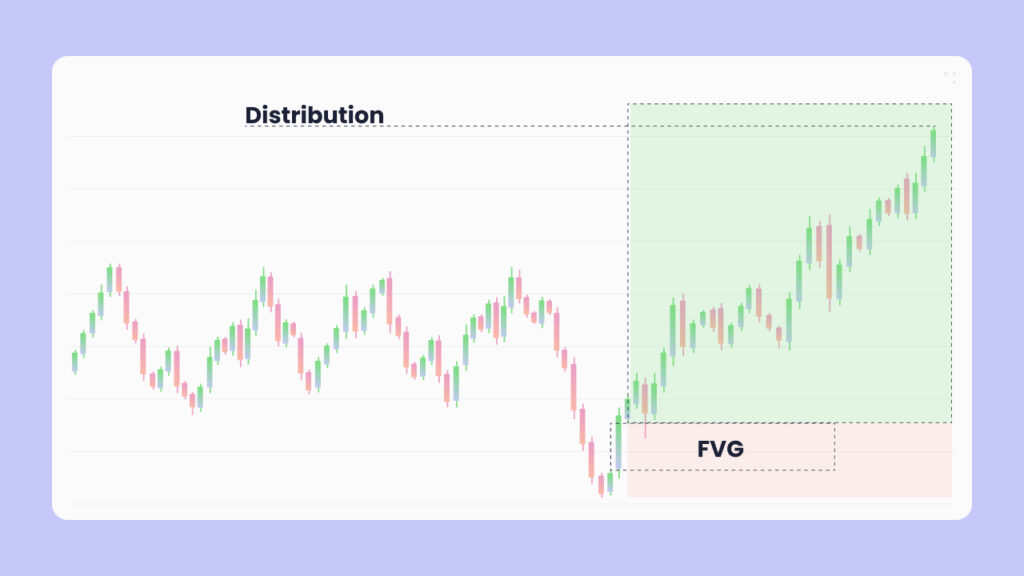
How to Trade the PO3 Strategy
Here’s a step-by-step example using the London Open:
- Identify Accumulation:
During the Asian session, mark out tight consolidation or equal highs/lows. - Wait for Manipulation:
Around the London Open, price sweeps one side of the range (taking out stops).
Don’t react, just observe. - Confirm the Shift:
Look for a Break of Structure (BOS) or Fair Value Gap (FVG) in the opposite direction of the sweep. - Execute During Distribution:
Enter on the retest of the FVG or Order Block created during the shift.
Stop loss at the low/high of manipulation.
Target 1:3 RR or the next liquidity pool.
Why the PO3 Strategy Works
This framework aligns perfectly with institutional order flow:
- Accumulation = Liquidity building
- Manipulation = Liquidity collection
- Distribution = Liquidity delivery
By understanding where you are in this cycle, you stop reacting emotionally and start trading structurally.
Every market, timeframe, and session expresses this pattern, you just need to learn to spot it.
Trading Style
Best For: Intraday Traders
Works On: Forex • Indices • Gold
Confluences: Break of Structure (BOS), Fair Value Gaps (FVGs), Order Blocks (OBs), Liquidity Sweeps
Key Takeaways
✅ Markets move through three phases: Accumulation → Manipulation → Distribution
✅ The London Open often reveals this sequence most clearly
✅ Wait for manipulation to end and structure to shift before entering
✅ Trade with Smart Money, not against it
Final Thoughts
The PO3 Strategy simplifies what many traders overcomplicate.
By reading the market through this 3-phase lens, you gain clarity on bias, timing, and execution.
Next time you open your chart, ask yourself:
“Which phase am I in, accumulation, manipulation, or distribution?”
Answer that correctly, and you’ll always know what comes next.
Overview
PO3 Doesn’t Predict Direction, It Reveals the Path Institutions Already Chose
Markets don’t move randomly, they rotate through a repeatable three-phase cycle:
Accumulation → Manipulation → Distribution
The PO3 Strategy (Power of 3) reveals how Smart Money builds, traps, and delivers price each session, especially around the London open.
By identifying these three phases, traders can anticipate direction and time entries with precision.
The Core Framework
1. Accumulation
During quiet hours (often the Asian session), price consolidates within a range.
Liquidity builds above and below this zone, Smart Money prepares.
2. Manipulation
As London opens, price sweeps one side of the range, triggering stops and trapping traders.
This move collects liquidity, not genuine direction.
3. Wait for the Retest
Price often retraces into the OB to rebalance before continuing.
4. Distribution
After manipulation, structure shifts and price delivers in the true direction.
Enter after CHoCH/BOS, ideally on a retrace into an FVG or OB.
Stops go beyond the manipulation wick; target the opposite side of the range.
Execution Tips
✅ The PO3 pattern repeats daily, patience is key.
✅ Works best when aligned with higher-timeframe bias.
✅ Confirmation through displacement validates the setup.
Summary
- Phase 1: Accumulate liquidity.
- Phase 2: Manipulate stops.
- Phase 3: Distribute price.
Recognise the pattern → wait for the shift → trade the delivery.
Institutional Context
The Power of 3 reflects how institutions manage liquidity within each session.
Asia accumulates orders, London manipulates liquidity, and New York delivers.
Each phase exists to source orders and redistribute exposure.
Execution begins only once the manipulation ends and structure confirms the shift.
Execution Logic
- Accumulation: Asian or pre-London range builds internal liquidity.
- Manipulation: London open sweeps range liquidity.
- Shift: Displacement confirms reversal (CHoCH/BOS + FVG).
- Entry: Retrace into displacement zone for precise execution.
- Delivery: Target opposing session liquidity or daily extremes.
Precision Notes
- Avoid trading inside accumulation, wait for the sweep.
- Most effective near session overlaps (London-NY).
- For advanced confluence, confirm timing with SMT or correlated asset divergence.
Principle
Every session runs the same story, build, trap, deliver.
Recognise the sequence, and you’ll trade with Smart Money, not against it.