


Introduction
Price Isn’t Random, It’s Either Expensive or Cheap to Smart Money
Institutions don’t chase price, they wait for value.
While retail traders jump into impulsive moves, Smart Money patiently waits for price to return to areas of imbalance, where risk is lowest and reward is highest.
That principle forms the foundation of the Premium & Discount model, a simple yet powerful concept that helps traders identify whether price is cheap (discount) or expensive (premium) within a trading range.
Knowing where you are in the range determines when to trade, not just what to trade.
What Are Premium & Discount Zones?
Every market move can be divided into two halves:
- Discount Zone (Below 50%) → Where Smart Money buys value
- Premium Zone (Above 50%) → Where Smart Money sells value
The midpoint (the 50% line) of a swing range acts as the equilibrium, the “fair value” of price.
This concept ensures you’re entering with institutional intent, not against it.
Institutional traders look to take positions on the correct side of this line, not in the middle of uncertainty.
Why Smart Money Waits for Value
When large players enter the market, they can’t execute millions in orders at any random price. They need liquidity and value.
Here’s how they approach it:
- Buy at Discount: When price trades below the 50% equilibrium of a bullish range, it’s considered “cheap.” This is where institutions look to accumulate long positions.
- Sell at Premium: When price moves above 50% of a bearish range, it’s considered “expensive.” Institutions look to distribute or short from these zones.
By entering at value, they reduce drawdown, control risk, and maximise reward potential, the opposite of what most retail traders do when they buy highs and sell lows.
How to Mark Premium & Discount Zones
Step 1
Identify the Range
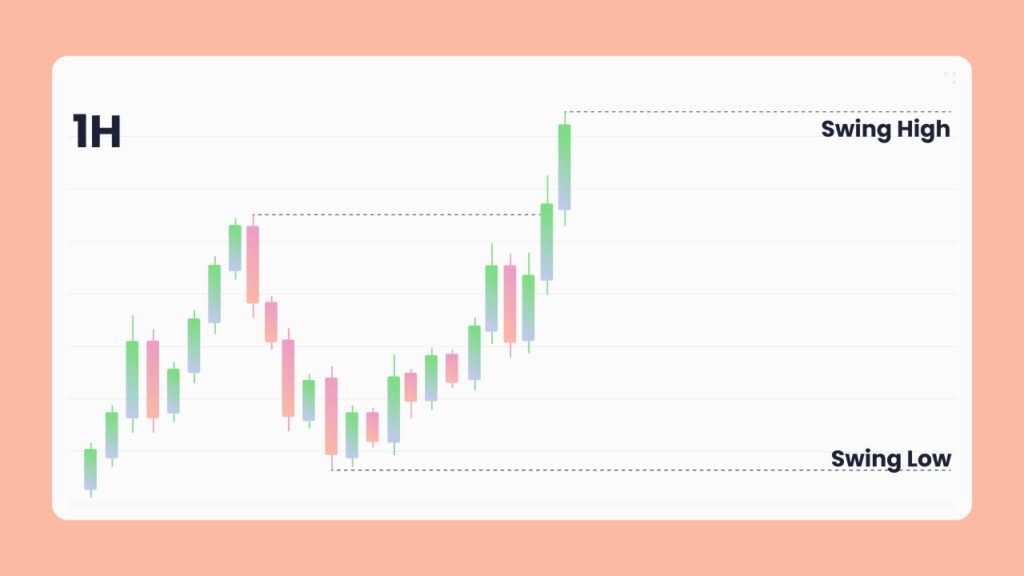
Find a clear swing high and swing low that defines the current market leg.
This can be on any timeframe, from the 1-minute to the 1-hour, depending on your trading style.
Step 2
Use the Fibonacci Tool
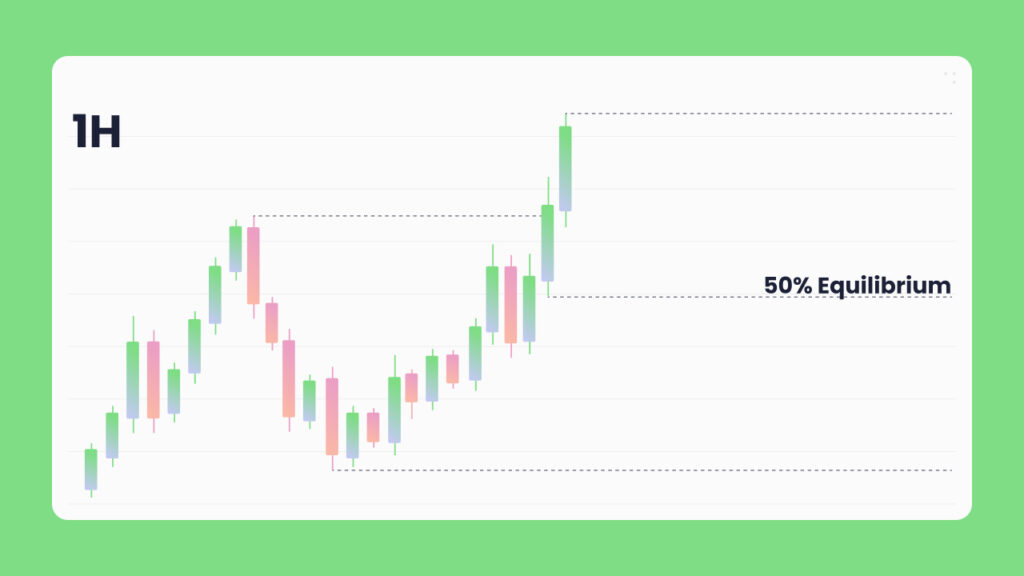
Apply a Fibonacci retracement from the swing low to swing high (in a bullish scenario) or high to low (in a bearish scenario).
The 50% level is your equilibrium line.
Step 3
Divide the Range
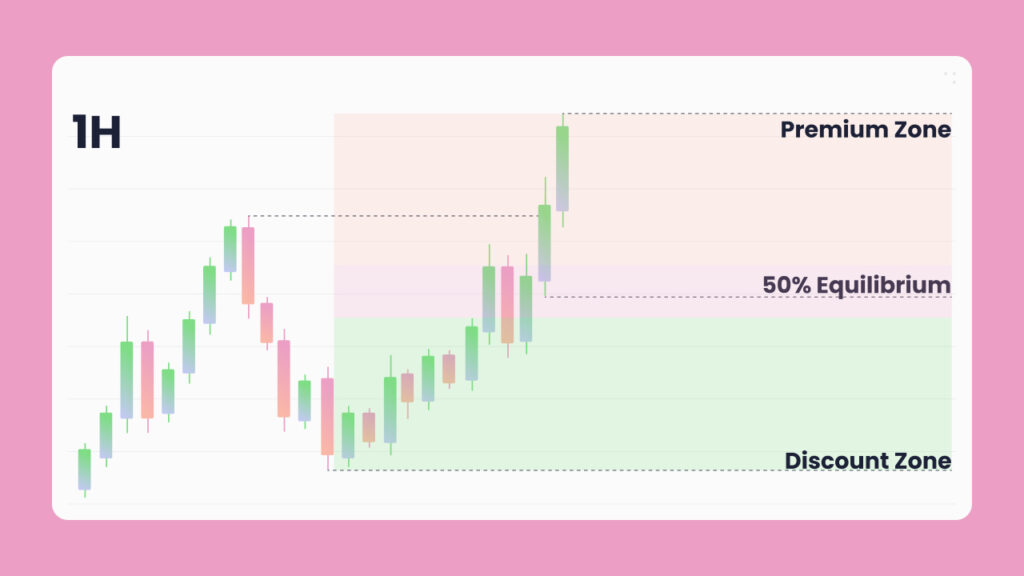
- Below 50% = Discount Zone
- Above 50% = Premium Zone
Visually mark these areas so you instantly know whether price is trading at value or chasing imbalance.
How Smart Money Builds Positions Within Value
Institutions accumulate or distribute in phases.
When price enters a discount zone, Smart Money begins building long positions, often within Order Blocks, Fair Value Gaps (FVGs), or Liquidity Sweeps.
When price moves into a premium zone, the process reverses, Smart Money looks to sell or short, typically near zones of previous inefficiency or trapped liquidity.
The key idea: Don’t enter because price is moving fast, enter because it’s at value.
Aligning Entries with Institutional Pricing
Once you’ve identified premium and discount zones, refine your entries using Smart Money Concepts (SMC):
✅ In Discount: Wait for a Break of Structure (BOS) or FVG fill before going long.
✅ In Premium: Wait for a liquidity sweep or bearish confirmation before going short.
This ensures your trades are not only well-priced but also timed with institutional flow.
Example
Let’s take NASDAQ during the New York session:
- Identify the swing high and swing low from the previous session.
- Mark the 50% midpoint, everything below is discount, above is premium.
- If price opens in discount, you look for bullish setups (Order Blocks or FVGs) to go long.
- If price rallies into premium, shift bias to potential shorts near liquidity or inefficiency zones.
This framework keeps you consistently trading from value, not from emotion.
Trading Style
Best For: Intraday & Swing Traders
Works On: Forex • Indices • Gold
Confluences: Order Blocks (OBs), Fair Value Gaps (FVGs), Liquidity Sweeps, Break of Structure (BOS)
Key Takeaways
✅ Institutions buy below 50% (discount) and sell above 50% (premium)
✅ Use the 50% line as equilibrium, your fair value reference
✅ Trade at value, not emotion
✅ Combine with OBs and FVGs for institutional-grade setups
Final Thoughts
The Premium & Discount model brings structure to market uncertainty.
When you understand where price is relative to value, you stop chasing momentum and start trading with intention.
Next time you open a chart, ask yourself one question:
“Am I trading from value or from emotion?”
If the answer is value, you’re already thinking like Smart Money.
Overview
Price Isn’t Random, It’s Either Expensive or Cheap to Smart Money
Institutions don’t chase price, they buy when it’s cheap and sell when it’s expensive.
The Premium & Discount Zones Strategy helps traders identify where Smart Money is likely to position within a defined range.
By understanding where price sits relative to equilibrium (50%), you can trade from value, not emotion.
The Core Framework
1. Define the Range
Mark a clear swing high and swing low on your chosen timeframe.
This defines your trading range.
2. Identify Equilibrium (50%)
Draw a midpoint line, this splits the range into premium (above) and discount (below) zones.
3. Determine Value
- Below 50% (Discount): Look for buy setups.
- Above 50% (Premium): Look for sell setups.
4. Execute with Confluence
Combine premium/discount zones with structure, FVGs, or OBs to refine your entries.
Execution Tips
✅ Don’t trade in equilibrium, wait for price to move into value zones.
✅ Combine with liquidity sweeps or daily bias for stronger setups.
✅ Works best in trending conditions with clear structure.
Summary
- Below 50% = buy zone.
- Above 50% = sell zone.
- Use structure and FVGs for entry confirmation.
- Always trade from value, not emotion.
Knowing where to trade is just as important as knowing when.
Institutional Context
Smart Money accumulates positions at discount and distributes them at premium, using range equilibrium as the reference for value.
Institutional trading isn’t about direction; it’s about location and timing.
Understanding this pricing model helps define where liquidity will be delivered next.
Execution Logic
- Range Definition:
Mark HTF swing high and low to form your dealing range. - Equilibrium:
Identify the 50% midpoint as fair value. - Value Alignment:
- Look for longs from discount zones with displacement confirmation.
- Look for shorts from premium zones after liquidity sweeps.
- Entry:
Execute on FVG/OB retrace within the value zone. - Targets:
Opposite side of the range or external liquidity.
Precision Notes
- Works best when combined with HTF bias and session timing.
- Avoid entries around equilibrium; Smart Money is inactive there.
- Look for confluence with manipulation and structure shift to validate intent.
Principle
Smart Money trades where value exists, not where emotion reacts.