


Introduction
From Retail Trap to Smart Money Tool
Trend lines are one of the first tools new traders learn, and one of the easiest for Smart Money to exploit.
While retail traders use them to define direction and “safe” entries, institutions view them as liquidity highways, areas where stop losses accumulate and where engineered moves often begin.
When combined with market structure, Order Blocks (OBs), and Fair Value Gaps (FVGs), trend lines evolve from a basic visual aid into a precision entry tool that reveals where real institutional activity happens.
Why Trend Lines Still Matter
Trend lines aren’t wrong, they’re just misunderstood.
Retail traders often connect swing highs and lows to define “support” or “resistance.” While this works visually, it’s not how price truly moves.
In Smart Money Concepts (SMC), trend lines show something far more powerful: liquidity buildup.
Here’s how:
- Each time price taps a trend line, traders enter in the same direction (buying off support or selling off resistance).
- Behind those entries lie stop losses, perfectly lined up below or above the line.
Smart Money sees that cluster of stops as liquidity to harvest.
Eventually, price breaks the trend line, triggering those stops, not to end the trend, but to fuel the next institutional move.
How Smart Money Uses Trend Lines
Smart Money doesn’t trade from trend lines; they trade through them.
They use these areas as liquidity engines to:
- Trap retail traders into false breakouts or bounces.
- Collect liquidity from stop losses and breakout orders.
- Re-enter in the direction of the real move once liquidity is cleared.
The process looks like this:
- Immediately after, structure shifts → Smart Money enters in the true direction.
- Price respects a trend line multiple times → liquidity builds.
- Eventually, price breaks through → stops are taken.
Step 1
Identify the Active Trend Line
Draw your trend line along valid swing points (two or more touches).
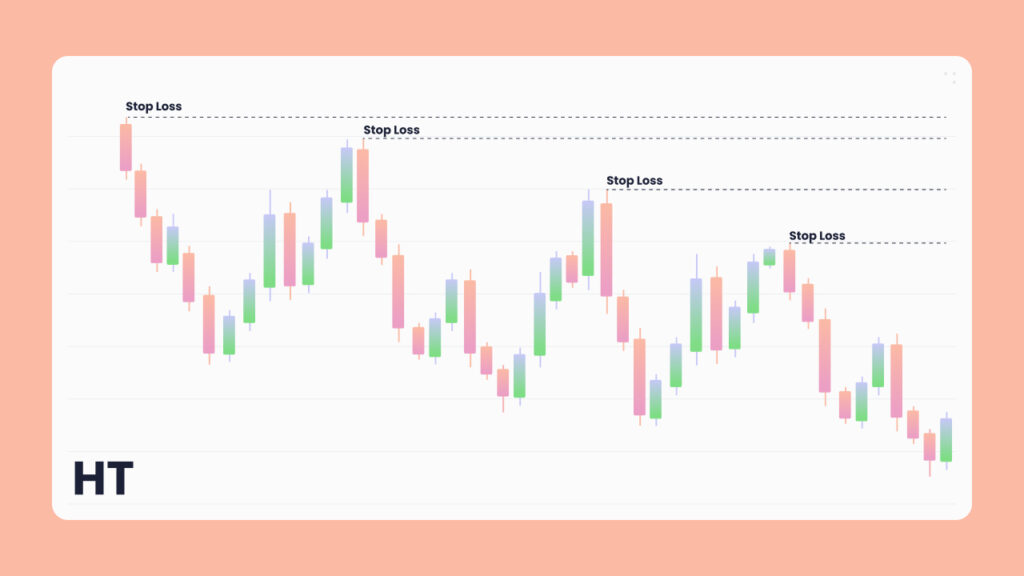
You’re not using it to predict, only to locate where liquidity is building.
Step 2
Wait for the Sweep
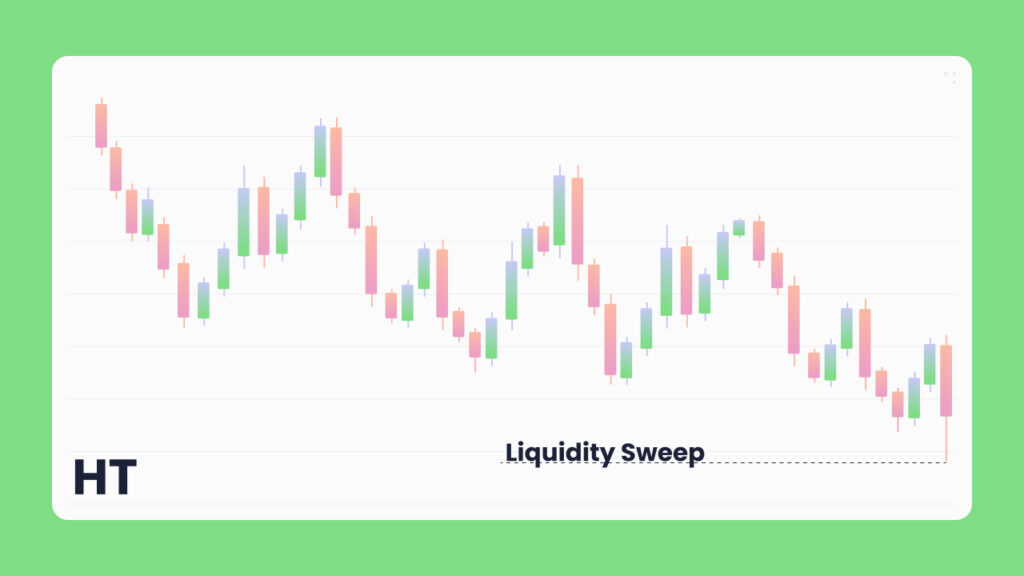
When price finally breaks the line, don’t react emotionally.
This is likely the liquidity sweep, Smart Money clearing out stops from both sides.
Step 3
Confirm Structure Shift
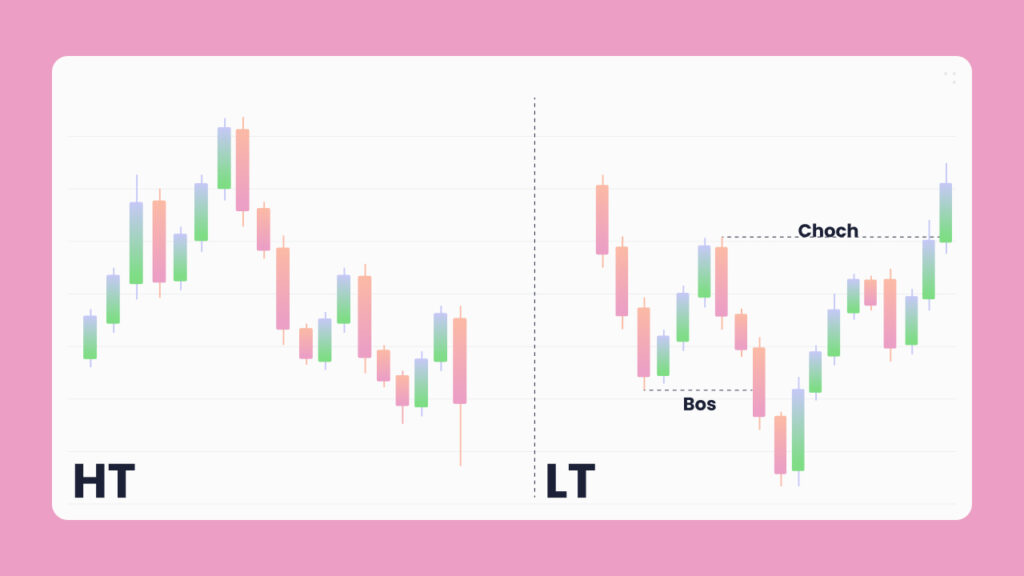
After the sweep, look for confirmation:
- A Break of Structure (BOS) or Change of Character (CHoCH) in the opposite direction.
- A Fair Value Gap (FVG) or Order Block (OB) forming post-sweep.
These validate that the manipulation is complete and the real move is beginning.
Step 4
Execute with Confluence
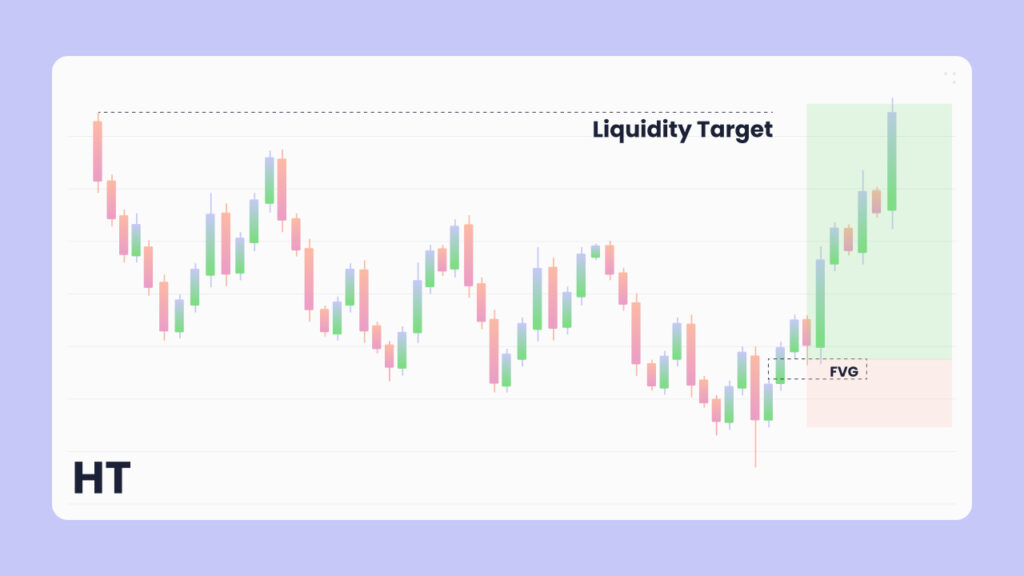
Wait for price to retrace into the OB or FVG created during displacement.
Enter in line with the structure shift, setting stops just beyond the manipulation wick or OB boundary.
This transforms a simple trend line break into a Smart Money entry.
Example
Imagine price trending upward with a clear ascending trend line.
Retail traders continue buying every touch, placing stops just below it.
Eventually, price breaks below, triggering those stops.
Immediately after, a bullish Order Block forms and structure shifts back up.
Smart Money enters long, using the retail stop hunt to fuel the next impulsive leg. That’s not a trend line failure, it’s a liquidity event.
Why This Strategy Works
This approach flips the traditional narrative:
- Retail traders see trend lines as safety.
- Smart Money sees them as opportunity.
By combining trend lines with institutional confluences, structure, FVGs, and OBs, you’re no longer reacting to false signals.
You’re anticipating where the liquidity is and positioning after it’s taken.
Trading Style
Best For: Intraday & Swing Traders
Works On: Forex • Indices • Gold
Confluences: Order Blocks (OBs), Fair Value Gaps (FVGs), Liquidity Sweeps, Break of Structure (BOS)
Key Takeaways
✅ Trend lines show where liquidity builds, not where it ends
✅ Smart Money uses trend line breaks to collect stops
✅ Combine with structure, OBs, and FVGs for confirmation
✅ Trade after the liquidity event, not during it
Final Thoughts
Trend lines aren’t outdated, they’re just misunderstood.
Once you see them through the lens of Smart Money Concepts, they transform from basic retail tools into precision liquidity indicators.
Next time you draw one, don’t ask, “Will it break?” Ask instead, “Whose liquidity sits beyond it, and what happens after it’s taken?”
Trade what follows, not what appears. That’s where the real edge lies.
Overview
From Retail Trap to Smart Money Tool
Trend lines aren’t just tools for direction, they’re liquidity maps.
The Trend Line Strategy focuses on trading through trend lines, not from them.
You wait for liquidity to build, watch it get swept, and then trade the structural shift that follows.
The Core Framework
1. Identify the Active Trend Line
Connect at least two valid swing points, this defines where liquidity is building.
2. Wait for the Sweep
When price breaks through the trend line, that’s not a trend change, it’s a liquidity event.
Avoid reacting immediately.
3. Confirm the Shift
Look for BOS or CHoCH in the opposite direction of the sweep, paired with displacement.
4. Execute from Value
Enter on retrace into the FVG or Order Block created during displacement.
Stops go beyond the sweep wick; target the next liquidity pool.
Execution Tips
✅ Use trend lines to anticipate where stops are, not where reversals occur.
✅ Combine with FVG or OB confluence for structure-backed entries.
✅ Works across Forex, Indices, and Gold for both intraday and swing plays.
Summary
- Trend lines = liquidity build-up
- Break = liquidity sweep
- Shift = confirmation
- Retrace = execution
Trade the intent behind the line, not the line itself.
Institutional Context
Trend lines represent structured liquidity buildup, Smart Money uses them to locate stops, trigger traps, and fuel delivery.
The line itself has no technical power; its value lies in the liquidity it attracts.
When price sweeps the line, displacement confirms intent. That’s where execution begins.
Execution Logic
- Build-Up: Identify trend lines formed by multiple clean touches.
- Sweep: Watch for a strong break, liquidity event, not reversal.
- Shift: Confirm structure change with BOS/CHoCH + FVG creation.
- Entry: Execute on retrace into OB/FVG inside displacement.
- Risk: Invalidation above/below sweep; partials into delivery.
Precision Notes
- Ideal confluence when sweep occurs near session open or HTF imbalance.
- Avoid trend line trades without displacement confirmation.
- For refined execution, combine with SMT divergence or order-flow imbalance.
Principle
Trend lines don’t hold price, liquidity beyond them funds the next move.