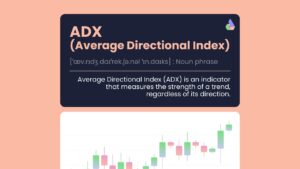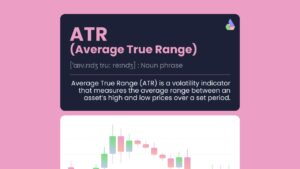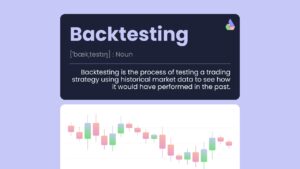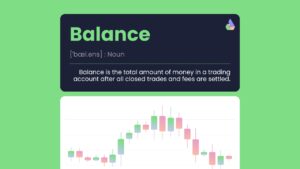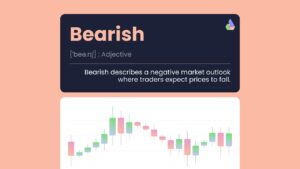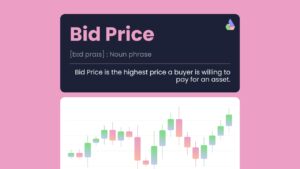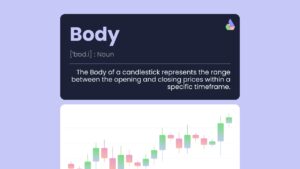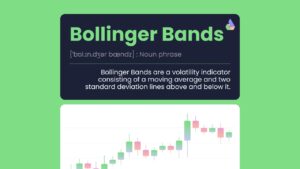

Learn trading terminologies, the trading terms, that traders use.
These terminologies are what you might hear other traders say or abbreviate. You don’t need to know them all, but it is worth having a scroll through and getting a generic understanding of them.
Understanding trading terminology helps you interpret charts, follow market analysis, and understand what other traders, educators, and platforms are communicating.
When you understand the language of trading, you:
Make faster decisions
Avoid confusion or mistakes
Understand market sentiment
Read price action more clearly
Learn strategies more easily
If you don’t know the terms, everything feels 10x harder.
When you do, trading becomes far more logical.
Trading terms aren’t “just definitions” — they’re shortcuts to thinking clearly.
Knowing terms helps you:
Understand entry and exit signals
Spot trends and market structure
Read professional analysis
Communicate with other traders
Build a proper strategy
Use trading tools correctly
Many traders struggle simply because they don’t understand the terminology behind the concepts they’re trying to use.
No, you only need to learn the terms you use daily.
Start with the basics:
Market structure
Candlestick names
Order types
Risk management terms
Timing/session terms
As you grow, naturally you’ll learn more advanced terminology.
Think of it like learning a new language: you don’t need every word immediately — just the important ones.
Here are the core terms every beginner should understand first:
Entry
Stop Loss (SL)
Take Profit (TP)
Risk-to-Reward Ratio (R:R)
Lot size / position size
Trend
Support & resistance
Breakout / pullback / retest
Liquidity
Volatility
Your strategy becomes clearer and easier to follow when you understand the language behind it.
For example:
Knowing “market structure” helps you identify trends
Understanding “break and retest” improves entries
Understanding “liquidity” helps you avoid bad trade locations
Knowing “stop run” helps you understand why price spikes
Knowing “session highs/lows” helps time entries
Your terminology knowledge directly impacts how successfully you execute your strategy.
About 80% of trading terminology is universal across all markets.
Examples:
Candlesticks
Trends
Breakouts
SL/TP
Liquidity
Support/resistance
The differences usually appear in:
Trading sessions
Market hours
Volatility terms
Position sizing
Margin requirements
But the core language remains the same.
Most trading mistakes come from misunderstanding:
The setup
The timing
The risk
The market structure
The sessions
The indicators
The signal
When you understand the terms properly, your decision-making becomes clearer and more confident — and you stop taking trades you don’t fully understand.
Yes — massively.
A journal becomes 10x more useful when you can accurately describe:
The setup
The market structure
The reason for entry
The confluence used
The psychological state
The key mistakes
Tools like FX Notes turn this into a simple workflow because the vocabulary becomes part of your review.
Knowing terminology = knowing how to write clear, meaningful trade notes.
The easiest way is to learn terms in context, not by memorising lists.
Best methods:
Read definitions while watching charts
Learn 5–10 terms per strategy
Use flashcards
Use a glossary page (like yours)
Journal trades using the correct terminology
Look up any term you don’t recognise immediately
Understanding > memorisation.
Surprisingly: no.
Most professional traders use:
Simple setups
Simple terminology
Simple rules
Terms only become confusing when educators overcomplicate them.
Your glossary will help remove the confusion and make trading feel accessible.